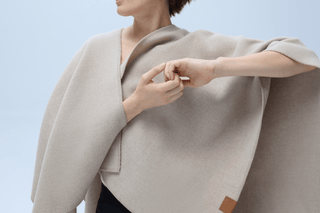
If you move between feeling hot and cold at your desk, a layer that is easy to take off and put back on can make the day more comfortable. An open-front, sleeveless piece is one option to keep within reach.

Some workdays call for steady warmth. Others feel more changeable: a wave of heat, a damp collar, an open window, then a chill that sends you reaching for the layer you just removed. You might recognize this pattern during perimenopause or menopause, when office air conditioning cycles, after a brisk commute, or when you share a thermostat with someone who prefers a different temperature. The reasons vary, but an adaptable set of layers can make it easier to respond as your comfort changes.
The Murmurs approach to changing temperatures: choose layers that are easy to add or remove, and keep an extra one within reach of your chair.
Key Takeaways
- Ease of adjustment matters. If you move between feeling warm and cool throughout the day, choose a layer that is simple to add or remove as needed.
- Consider a sleeveless top layer. An open-front cape, scarf, or lap blanket can be simpler to adjust than a pullover, with fewer movements to work around.
- Comfort next to the skin, adjustable warmth outside. A thin base layer and a removable outer piece give you more ways to adjust than a single heavy garment.
- Keep the layer where you can reach it. Try the chair back or a nearby drawer, so it is easy to pick up when you need it.
- Three Murmurs starting points: the Ember Wearable Blanket Cape (90% wool, 10% cashmere, 44 × 45.7 in / 112 × 116 cm), an open-front layer to lift off the shoulders; the Whisper Long Scarf (100% cashmere, 63 × 12.6 in / 160 × 32 cm), a compact layer for the neck; the Whisper Triangle Shoulder Wrap (70.8 × 23.6 in / 180 × 60 cm), a wrap you can hand wash at home when needed.
Why Do I Go From Hot to Freezing at My Desk?
Several factors can affect how warm or cool you feel at a desk, and more than one may be involved.
Hot flashes are one possibility. Mayo Clinic describes them as sudden warmth, often in the chest, neck and face, and lists feeling chilled as the hot flash lets up among the symptoms. An episode may last 1 to 5 minutes, though frequency and intensity vary. If your comfort changes quickly, an easy-to-remove layer can be useful without adding much interruption to your work.
The room can change, too. Air conditioning that cycles on and off may feel particularly noticeable at a desk near a vent. Sitting still for long periods can also leave you feeling cooler than when you were moving around. And the sweater that felt comfortable on the walk from the station may feel too warm once you settle into your chair.
Clothing does not address every cause of these changes, but it gives you a practical way to adjust your comfort at the desk. Keeping an extra layer close by may make those adjustments easier. If hot flashes are new, concerning, or affecting your work or sleep, speak with a healthcare professional; the Mayo Clinic page above offers useful background.
What Makes a Layer Fast?
Think about adjusting a warm layer in the middle of a call. A pullover may mean pausing, lifting it over your head, and finding somewhere to put it. Depending on your setup, that can feel like more effort than you want at that moment. A layer that opens at the front or simply rests on the shoulders offers another way to adjust, with less movement when you take it off or put it back on.
Four features are worth looking for in a layer you will adjust often.
- No sleeves. A cape, scarf, or lap blanket gives you fewer parts to work around when adjusting coverage.
- Open front. A piece without closures can be easy to lift off and drape back over the shoulders.
- Light enough to combine. Two lighter layers give you the option of removing one while keeping some coverage.
- Fits naturally with your outfit. A layer you feel comfortable wearing on camera may be easier to use throughout the day.
Layers Compared: How Fast They Come Off, and How They Look on a Call
| Layer | To remove | On a video call | Useful when |
|---|---|---|---|
| Pullover sweater | Usually requires a pause and lifting over the head | Removal is likely to be visible | You want consistent warmth |
| Cardigan | Slip out of the sleeves; manage any fastenings | A familiar clothing layer; adjustment may be visible | You prefer sleeves and adjustable front coverage |
| Open-front wool cape | Lift off the shoulders; set it within reach | Can sit naturally alongside your outfit | You want to adjust shoulder coverage often |
| Narrow cashmere scarf | Undo a loose loop and lift away | Can work as part of your outfit | You want a small extra layer around the collar |
| Lap blanket | Fold back or lift off the knees | Often out of frame; check your camera preview | You want to adjust leg coverage separately |
| Heated throw | Switch off and remove; manage the cord | May be visible; placement depends on the cord | You prefer active warmth in a consistently cold room |
The table offers a few ways to think about convenience, coverage, and your call setup. Sleeveless pieces can be easy to adjust, which makes a cape one option for a desk where your comfort changes throughout the day. A cardigan or another familiar layer may suit you just as well.
How to Dress for a Desk When Your Temperature Swings
1. Start with a base layer that handles moisture
Start with something thin and comfortable against your skin. If sweating is a regular concern, look for a fabric designed to manage moisture and consider how quickly the garment dries. Fine merino or a moisture-wicking synthetic are options; modal or a lightweight cotton blend may also feel comfortable, depending on the fabric and your preferences. Fiber content is only part of the picture: thickness, construction, and fit matter too. Keeping a spare camisole or tee in a drawer gives you the option of changing if your base layer feels damp.
2. Keep the middle layer simple
A shirt, a fine knit, or a blouse can provide the familiar middle layer of your outfit. Choose something you feel comfortable wearing when the room is warmer, then use a removable outer layer for extra warmth. That gives you more room to adjust than relying on a single heavy garment.
3. Try an open-front cape as the top layer
An open-front cape is one option to try. The Ember Wearable Blanket Cape is a single panel with a soft V-neckline, an open front, and no closures. At 44 in (112 cm) across, it offers shoulder and upper-arm coverage while leaving room for your forearms to move; the fit will depend on your build. Lift it off when you feel warm, place it within reach, and bring it back over your shoulders when you want another layer. It is 90% wool and 10% cashmere, with a fabric weight of about 390 g/m². The Ember Wearable Blanket Cape is dry-clean recommended; always follow the care label.
Fabric weights are nominal mill specifications, rounded to the nearest 10 g/m²; finished pieces vary by a few percent with cut and finishing.
Wool's ability to absorb moisture vapor is another reason to consider it. Woolmark reports that wool can absorb up to about 35% of its weight in moisture before feeling wet. That fiber property can contribute to comfort, though the feel of a finished garment also depends on its construction, thickness, and the layers beneath it. For more on warmth and breathability, see Wool vs. Cashmere: Which Is Warmer?.
4. Add a scarf if you want warmth around the collar
A hot flash can affect the chest, neck and face, so a neck layer may be something you want to adjust separately. If you like a little extra warmth around an open collar, a narrow scarf offers a small, easy-to-remove layer. The Whisper Long Scarf is 100% cashmere at 63 × 12.6 in / 160 × 32 cm. Try a loose loop at the collar that you can undo when you feel warm. The Whisper Long Scarf is dry clean only.
5. Keep the legs covered separately
If your legs feel cool while your upper body feels warm, it helps to have separate layers for each. A lap blanket lets you adjust coverage over the knees without adding anything around your shoulders. The Hush Petit Office Lap Blanket is 100% wool at 30 × 40 in / 76 × 101 cm, a compact size for lap and knee coverage and storage in a suitably sized drawer. Keep it on when it feels comfortable, and fold it back or remove it when you need less warmth. The Hush Petit Office Lap Blanket is dry clean only. For ways to keep it in place, see How to Keep a Blanket at Your Desk Without It Sliding Off.
6. Keep a small fan where the layer lives
A small desk fan gives you another way to adjust how the workspace feels. Choose a quiet model, start with a gentle setting, and direct the airflow where it feels comfortable. Keeping the controls within reach, alongside your extra layer, makes it easy to use one or the other as needed.

Make Room for Care and Cleaning
Sweating may mean a layer needs more frequent cleaning, especially if it rests directly against your skin. Care requirements are worth considering alongside warmth and fit. A dry-clean-only wool or cashmere piece may work well as an outer layer over a shirt; airing it between wears can help keep it fresh. For something you expect to wear against damp skin more often, a piece you can wash at home may be more convenient.
The Whisper Triangle Shoulder Wrap offers that option. It is 63% polyester, 21% wool and 16% modal at 70.8 × 23.6 in / 180 × 60 cm, with a triangular shape to drape over the shoulders, point at the back, or tie loosely at the front. It folds into a compact layer to keep nearby. For the Whisper Triangle Shoulder Wrap, the care instructions are hand wash cold and hang to dry, which allows for cleaning at home when needed. For other pieces, air them between wears, blot spills rather than rubbing, and follow the Care Guide and the individual care label.
What to Keep at the Office
If you work both at home and in an office, keeping a few useful pieces at each desk can save you from packing them every morning. Choose from this list according to the space you have and the coverage you prefer.
- One open-front layer on the chair back. A cape, or the triangle wrap if you prefer an option you can hand wash at home.
- One scarf in the drawer. A narrow piece in a color that works with your usual outfits.
- One lap blanket in the same drawer. Choose a compact piece that fits your available storage.
- A spare base layer. For days when you would welcome a dry change of clothing.
- A desk fan. Small, quiet, with adjustable airflow and controls within reach.
These pieces give you several ways to adjust your comfort without changing your whole outfit. Choose what fits your daily routine, storage space, and workplace expectations. For more on wearing a wrap or using a blanket at work, see Is It Unprofessional to Have a Blanket at Your Desk?.
Frequently Asked Questions
What should I wear to work if I get hot flashes and then feel cold?
Try light layers you can adjust separately: a comfortable base layer, a shirt or fine knit, and an outer layer that is easy to remove. An open-front wool cape such as the Ember Wearable Blanket Cape (90% wool, 10% cashmere, 44 × 45.7 in / 112 × 116 cm) is one option without sleeves or closures to work around. If your legs feel cool, add a separate lap blanket and adjust it as needed.
Is a cape better than a cardigan for hot flashes?
A cape may be easier to lift off because there are no sleeves or fastenings to manage. A cardigan can be just as useful if you prefer its fit or want to leave it open rather than remove it. The better choice is the one you feel comfortable wearing and adjusting during your workday.
Why do I feel cold after a hot flash?
Mayo Clinic notes that some people feel chilled after a hot flash because of body heat loss. Damp skin or clothing may also feel cool as you settle again. A dry, comfortable base layer and an extra layer within reach can help you adjust your comfort afterward.
What fabric is best for a base layer when you sweat and then get cold?
Look for a base layer that feels comfortable and manages moisture well for your needs. Fine merino and moisture-wicking synthetics are options, but drying time also depends on the fabric's thickness and construction. Wool is worth considering for a removable outer layer. If frequent cleaning is a priority, check the care label: the Whisper Triangle Shoulder Wrap, for example, can be hand washed cold and hung to dry.
Can I take a layer off during a video call without it being obvious?
An open-front or sleeveless layer can make the adjustment simpler, though it may still be visible. A cape or loosely looped scarf often needs less movement than a pullover. A lap blanket may stay out of view in a head-and-shoulders frame; check your camera preview to see what your setup shows.
Should I see a doctor about hot flashes?
If hot flashes affect your daily activities or sleep, Mayo Clinic recommends talking with a healthcare professional about treatment options. You can also ask for advice if symptoms are new, concerning, or occur alongside other changes. This guide focuses on practical clothing choices for comfort while you work.
Dress with the Change in Mind
If your comfort changes during the day, it helps to choose layers with adjustment in mind. A comfortable base, a familiar middle layer, and an easy-to-remove outer piece give you a few ways to respond. Keep the extra layer nearby, and use as much or as little coverage as feels right.
At Murmurs, we'd put it simply: choose a layer that is easy to reach for, easy to remove, and comfortable to return to.
Where to Start
- Ember Wearable Blanket Cape — 90% wool, 10% cashmere, 44 × 45.7 in / 112 × 116 cm. An open-front shoulder layer with no sleeves or closures.
- Whisper Long Scarf — 100% cashmere, 63 × 12.6 in / 160 × 32 cm. A compact extra layer around the collar.
- Whisper Triangle Shoulder Wrap — 70.8 × 23.6 in / 180 × 60 cm. Hand wash cold and hang to dry at home.
- Hush Petit Office Lap Blanket — 100% wool, 30 × 40 in / 76 × 101 cm. For adjusting lap and knee coverage separately from the shoulders.
- Office & Desk Blankets — explore layers for a desk that feels cold.
- Wool Capes & Ruanas — explore open-front layers for the shoulders.
- How to Keep a Blanket at Your Desk Without It Sliding Off — practical ways to arrange a lap blanket.
- Cold Hands While Typing? Warm Your Core First — when the chill lands in your fingers.
- Is It Unprofessional to Have a Blanket at Your Desk? — fitting a wrap or blanket into your workplace.