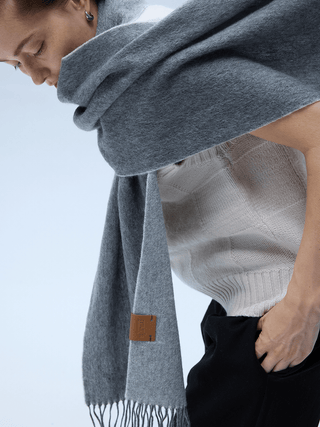
Cold hands while typing can be connected to how warm the rest of your body feels. In a cool environment, the body reduces blood flow to the hands to help conserve heat, so adding a layer across the shoulders and chest can be a useful place to start.
If you have tried fingerless gloves and still found your hands cold, the experience can be frustrating. Depending on their fit, gloves may feel awkward at the keyboard, leave your fingertips exposed, or simply offer less warmth than you need. A space heater is not always practical at work, either. This guide looks at why hands can get cold at a desk and which small changes may help.
The Murmurs approach to cold hands: give the rest of you a little warmth, too.
Key Takeaways
- Cold hands at a desk can be part of a whole-body response. In a cool room, your body may reduce blood flow to the hands to conserve heat. Overall warmth is worth considering alongside anything you wear on your fingers.
- Gloves can help, though comfort at a keyboard varies. They slow heat loss from the areas they cover. Fingerless styles leave the fingertips exposed, while fuller coverage can make typing less comfortable.
- A layer over the shoulders, chest and upper back is a practical starting point. Keeping your torso comfortable may help your hands feel warmer, while leaving your fingers free.
- Long stretches of sitting can leave you feeling chilly. You generate less heat sitting at a desk than walking around, so a room that felt comfortable on arrival may feel cooler later.
- Three Murmurs starting points: the Ember Wool Cashmere Cape (90% wool, 10% cashmere, 44 × 45.7 in / 112 × 116 cm) for a shoulder layer that leaves the hands free; the Whisper Long Cashmere Scarf (100% cashmere, 63 × 12.6 in / 160 × 32 cm) for a little extra coverage at the neck and chest; and the Hush Petit Office Blanket Wrap (100% wool, 30 × 40 in / 76 × 101 cm) for warmth across the lap and knees.
Why Do My Hands Get Cold When I Type?
Your hands play a part in regulating body temperature, with blood flow near the skin changing in response to warmth and cold. As the Cleveland Clinic explains, the body naturally reduces blood flow to the hands in a cold environment to help protect its vital organs. This can be a normal response to cold, although persistent cold hands can have other causes.
The connection between hand temperature and overall warmth has also been explored in research. In a 2009 study in the Journal of Applied Physiology, Flouris and Cheung exposed one hand of each of 15 participants to 0°C air while warming and cooling their bodies through water immersion. Brief increases in finger blood flow occurred during cooling while core temperature remained above baseline, and stopped once it fell below baseline. The findings suggest that overall thermal balance can influence the hands' response to cold, though these conditions were quite different from sitting in an office. Flouris and Cheung, 2009 (PDF)
At a desk, a reasonable takeaway is to consider how warm you feel overall. If your torso feels cool, an extra layer may help you feel more comfortable, including at your hands. Direct hand warming can still be useful, especially if your fingers remain cold.
Why does it get worse through the afternoon?
Typing involves little physical activity compared with walking between meetings or moving around the house. After a long stretch of sitting, you may begin to feel chilly even if the thermostat has not changed. This can be especially noticeable in a cool spare room or an office with steady air conditioning.
Why do fingerless gloves feel useless?
Fingerless gloves add warmth around the palm and, depending on the style, the wrist and lower fingers. But they leave the fingertips exposed, so they may not provide enough relief if that is where you feel the cold most. Fit matters, too: a bulky palm or thick seam can feel awkward at the keyboard. Full gloves offer more coverage, though some people find them harder to type in. Either style may be more comfortable when paired with adequate warmth elsewhere.

What Actually Keeps Hands Warm at a Keyboard?
Here are six approaches to try, starting with overall warmth and moving toward options for the hands themselves. The combination that feels best will depend on your room, clothing and preferences.
1. Cover the shoulders, upper back and chest
When your fingers feel cold, adding a layer elsewhere may not be your first thought. But a cardigan, sweater or wrap that covers the upper body can help you retain warmth while you work. Look for enough coverage across the shoulders and chest, with a fit that lets you reach the keyboard comfortably.
An open-front wool cape offers another way to add that layer while keeping your hands free. The Ember Wool Cashmere Cape is cut as one panel with a soft V-neckline and measures 44 in (112 cm) across, with coverage that varies by height and how you wear it. Made from 90% wool and 10% cashmere at 391 g/m², it can be layered over a shirt or light knit and adjusted as the room warms up. The Ember Wool Cashmere Cape is dry-clean recommended; always follow the care label.
2. Close the gap at the neck
If an open collar leaves your neck or upper chest feeling cool, a light scarf can add coverage without another full layer. A fine, narrow cashmere style is easy to work into an indoor outfit. The Whisper Long Cashmere Scarf is 100% cashmere at 63 × 12.6 in / 160 × 32 cm and 260 g/m², with a shape that can tuck inside an open collar or loop once over a sweater. It is a small adjustment to try if you notice a draft around your neckline. The Whisper Long Cashmere Scarf is dry clean only.
3. Add warmth across the legs
If your legs feel cool under the desk, a lap blanket can make sitting more comfortable and help reduce heat loss from the area it covers. The Hush Petit Office Blanket Wrap is 100% wool at 30 × 40 in / 76 × 101 cm, a compact size for draping over the lap and knees. Depending on your chair and fit, you may also be able to tuck it around the sides. It folds away between uses and is better suited to lap coverage than a full wrap around the shoulders and back. The Hush Petit Office Blanket Wrap is dry clean only.
4. Keep the wrists covered
A gap between your sleeves and hands can leave the wrists exposed to cool air. Longer sleeves or soft wrist warmers add coverage while leaving your fingers free to type. Choose a comfortable fit that does not feel tight or interfere with the keyboard. If you often wear shorter sleeves, this is a simple adjustment worth trying.
5. Move every 30 to 45 minutes
A brief movement break can help you feel warmer after sitting still. Try standing or walking for a couple of minutes every 30 to 45 minutes, adjusting the timing to suit your workday and mobility. The warmth may be temporary, so movement and comfortable layers can work well together. A warm drink can make the break more pleasant, too.
6. Gloves, heated pads and heaters: where they fit
If your hands still feel cold, thin gloves, a heated mouse pad or a hand warmer may provide useful local warmth. You can use them alongside extra layers or on their own, depending on what helps. Heated accessories and space heaters come with practical considerations such as power access, desk space, and workplace rules. If you are not sure what your office will accept, Is It Unprofessional to Have a Blanket at Your Desk? covers where the line usually falls. Gloves and mittens are also among the options the Cleveland Clinic suggests for cold hands. If your fingers repeatedly turn white or blue, feel numb, or stay cold in a warm room, speak with a healthcare professional.
Gloves vs. a Warm Core: Side by Side
| Approach | What it changes | At a keyboard | Needs an outlet |
|---|---|---|---|
| Fingerless gloves | Reduce heat loss from covered areas; fingertips remain exposed | Leave fingers free, though bulk and fit vary | No |
| Full gloves | Reduce heat loss across the whole hand | May affect typing accuracy, depending on thickness and fit | No |
| Heated mouse pad or hand warmer | Adds warmth directly to the area in contact | Coverage and ease of use depend on the design | Depends on the model |
| Space heater | Warms the air near the desk | Leaves hands free; requires suitable placement and workplace permission | Yes, for electric models |
| Lap blanket | Reduces heat loss from the covered parts of the legs | Leaves hands free and adds warmth below the desk | No |
| Cape or wrap over the shoulders | Adds insulation around the upper body | Can leave hands and forearms free, depending on the cut and drape | No |
For a desk that tends to feel cold, a shoulder layer and lap blanket can be a comfortable combination, adding coverage above and below the desktop. You may find that one is enough. We compare the two shapes in The Best Blanket for a Cold Office.
What to Wear on a Cold Day at a Desk
A layering order to try if you would like more warmth while keeping your fingers free.
- Against the skin: a thin long-sleeved base layer with comfortable cuffs. Merino or another fine knit can work well; longer sleeves offer more coverage if your wrists feel cold.
- Over that: whatever you would normally wear, such as a shirt or light sweater.
- Across the shoulders: a wool layer that feels comfortable while typing and looks at home in a meeting. The Ember Wool Cashmere Cape offers a more compact option; the Drift Lambswool Cape (90% lambswool, 10% cashmere, 51 × 57 in / 130 × 145 cm, dry-clean recommended) provides more fabric to wrap around the arms.
- At the neck: a fine scarf if an open collar feels drafty.
- On the lap: a wool lap blanket if your legs get cold. Fleece is another option; choose the weight and texture you find comfortable for a long sit.
These layers do not need a power source, which is useful in offices where heaters are discouraged. Choose pieces that feel easy to wear through both focused work and video calls. For more ideas, read How to Make Your Home Office Feel Cozy Without Adding Clutter.

Does Wool Matter Here, or Would Fleece Do?
Both wool and fleece can work well as a torso layer. Coverage, thickness and fit all affect how warm a piece feels, so the fiber name alone does not tell the whole story. For a desk, wool can be an appealing choice for its texture, drape and ease of styling with everyday clothing. Fleece may suit you better if you prefer a lightweight, casual layer. How either feels over a long sit depends on the fabric, the room and your own preferences. If you are weighing fibers, Wool vs. Cashmere: Which Is Warmer? looks at the details that influence warmth.
Frequently Asked Questions
Why are my hands cold when I type but the rest of me feels fine?
Your hands can feel the effects of a cool environment even when your torso still feels comfortable. Changes in blood flow and exposure to cool air can both play a part. Adding a layer around the upper body is one thing to try, alongside direct hand warmth if you need it. If the feeling persists in a warm room, it is worth discussing with a healthcare professional.
Do fingerless gloves help with cold hands while typing?
They can help by adding warmth around the parts of the hand they cover while leaving your fingers free. The trade-off is that the fingertips remain exposed, and some styles feel bulky against the keyboard. A thin, comfortable pair may suit you well; if it is not enough, consider adding warmth elsewhere or trying a different form of hand warming.
What is the best way to keep hands warm at a desk without a heater?
A useful starting point is to make sure your upper body and legs feel comfortably warm, then add direct hand coverage if needed. An open-front layer such as the Ember Wool Cashmere Cape (90% wool, 10% cashmere, 44 × 45.7 in / 112 × 116 cm) adds warmth around the shoulders while leaving your hands free. A lap blanket such as the Hush Petit Office Blanket Wrap (100% wool, 30 × 40 in / 76 × 101 cm) adds coverage across the lap and knees. Both are easy to adjust without changing the room temperature.
Is a cape better than a cardigan for cold hands?
Either can be a good option. The more useful choice is the one that gives you comfortable coverage and stays out of the way while you work. A cardigan offers sleeves and may button across the chest; a cape offers a looser drape that is easy to add or remove. The Ember Wool Cashmere Cape has a soft V-neckline and an open front, so you can arrange the fabric around your upper body while keeping your hands clear of the keyboard.
Why do my hands get colder in the afternoon at work?
A long period of sitting can leave you feeling cooler than you did when you were moving around earlier in the day. Room temperature, drafts, and clothing can also contribute. If you notice this pattern, try adding a comfortable layer and taking brief movement breaks—for example, every 30 to 45 minutes—to see what helps.
Should I see a doctor about cold hands?
Occasional cold hands in a cool room are common. Speak with a healthcare professional if they stay cold in a warm environment, take unusually long to warm up, or come with recurring color changes, numbness, pain, or skin changes. These symptoms can have causes that extra clothing alone will not address.
Warm the Part That Decides
When your hands feel cold at a keyboard, it is worth checking how warm the rest of you feels, too. A layer across the shoulders, a little coverage at the neck or a blanket over the knees can make a cool desk more comfortable. You may still prefer gloves or a hand warmer alongside them; there is room to find the combination that suits you.
At Murmurs, we'd start simply: a little warmth around the shoulders, and see how you feel.
Where to Start
- Ember Wool Cashmere Cape — 90% wool, 10% cashmere, 44 × 45.7 in / 112 × 116 cm. A shoulder layer that leaves your hands free for the workday.
- Whisper Long Cashmere Scarf — 100% cashmere, 63 × 12.6 in / 160 × 32 cm. A little extra coverage around an open collar.
- Hush Petit Office Blanket Wrap — 100% wool, 30 × 40 in / 76 × 101 cm. A compact layer for the lap and knees.
- Drift Lambswool Cape — 90% lambswool, 10% cashmere, 51 × 57 in / 130 × 145 cm. More fabric to wrap around you in a cooler room.
- Office & Desk Blankets — explore layers for a desk that feels a little chilly.
- Wool Capes & Ruanas — browse open-front layers for the shoulders.
- The Best Blanket for a Cold Office — lap blankets and wearable layers, and when each may suit your routine.
- Is It Unprofessional to Have a Blanket at Your Desk? — what reads as clothing, what reads as bedding, and how to keep a lap blanket out of sight.
- Gifts for Someone Who's Always Cold — ideas for someone who appreciates a little extra warmth.
- What Is a Ruana? — how capes, ruanas, ponchos, and shawls differ.